Villa dei Pini
Villa dei Pini
Dove il tempo cambia passo.
Ceglie Messapica · Puglia
Dove il tempo cambia passo.
Ceglie Messapica · Puglia
The Place
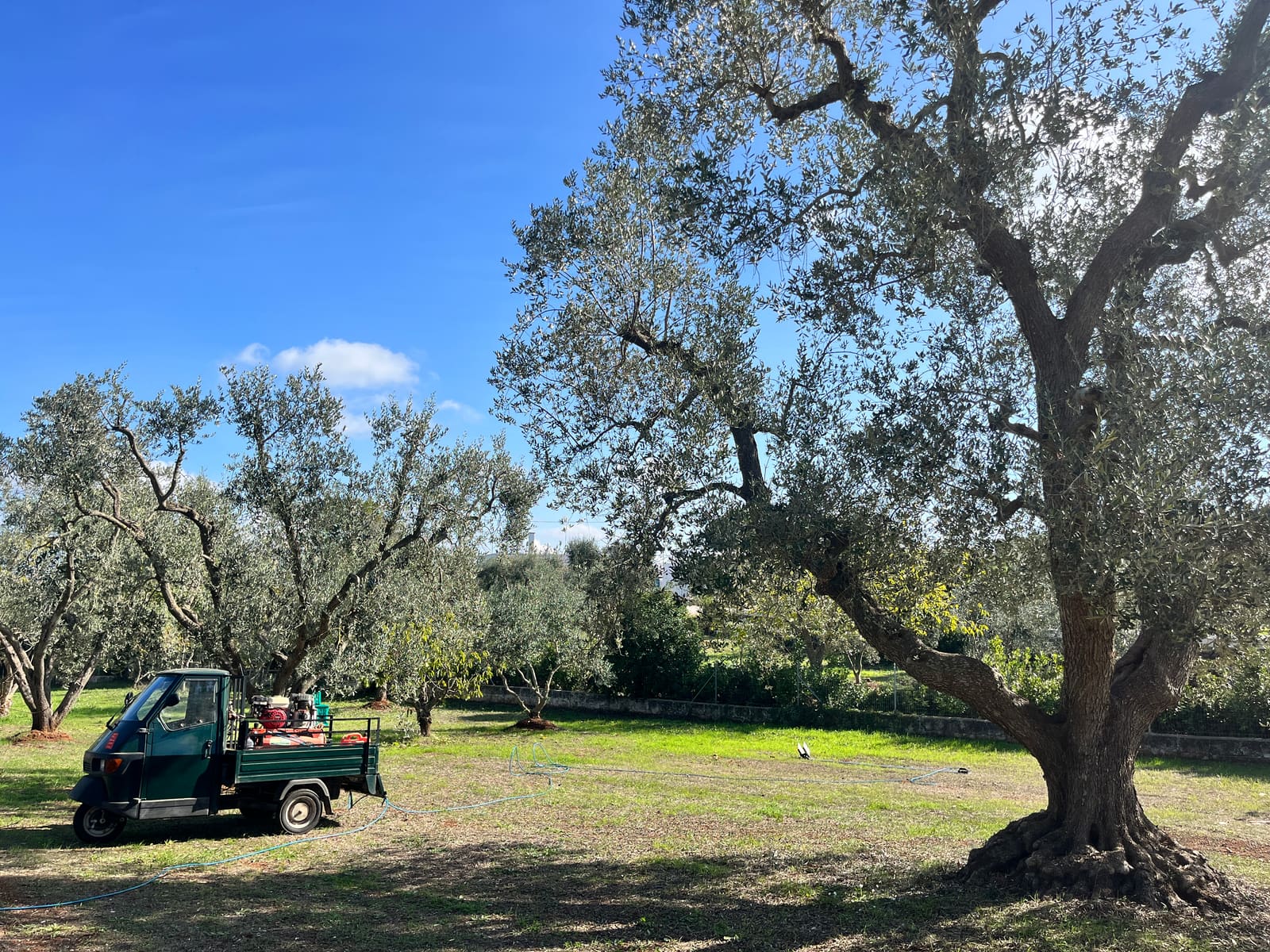
A straight dirt drive runs from the gate toward the house, bordered by low dry-stone walls, with about a hundred olive trees standing in rough grass on either side. Some are old enough that their trunks have twisted into knots.
And above everything, visible before you even reach the gate, stand two enormous stone pines. They dwarf the oldest olives. Their umbrella crowns lean toward each other like two people who have been standing together so long they've started to agree. The place is named after them.
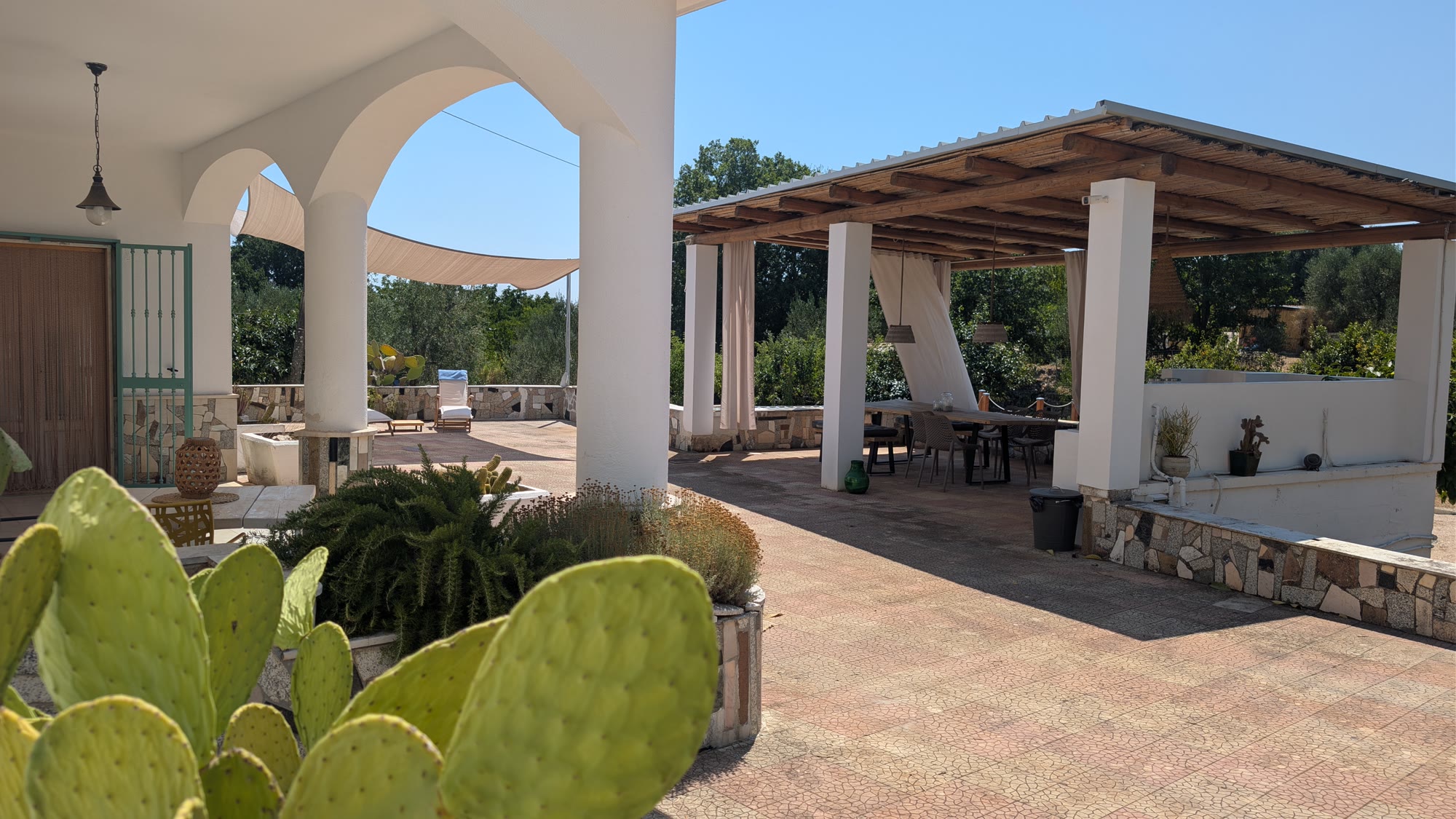
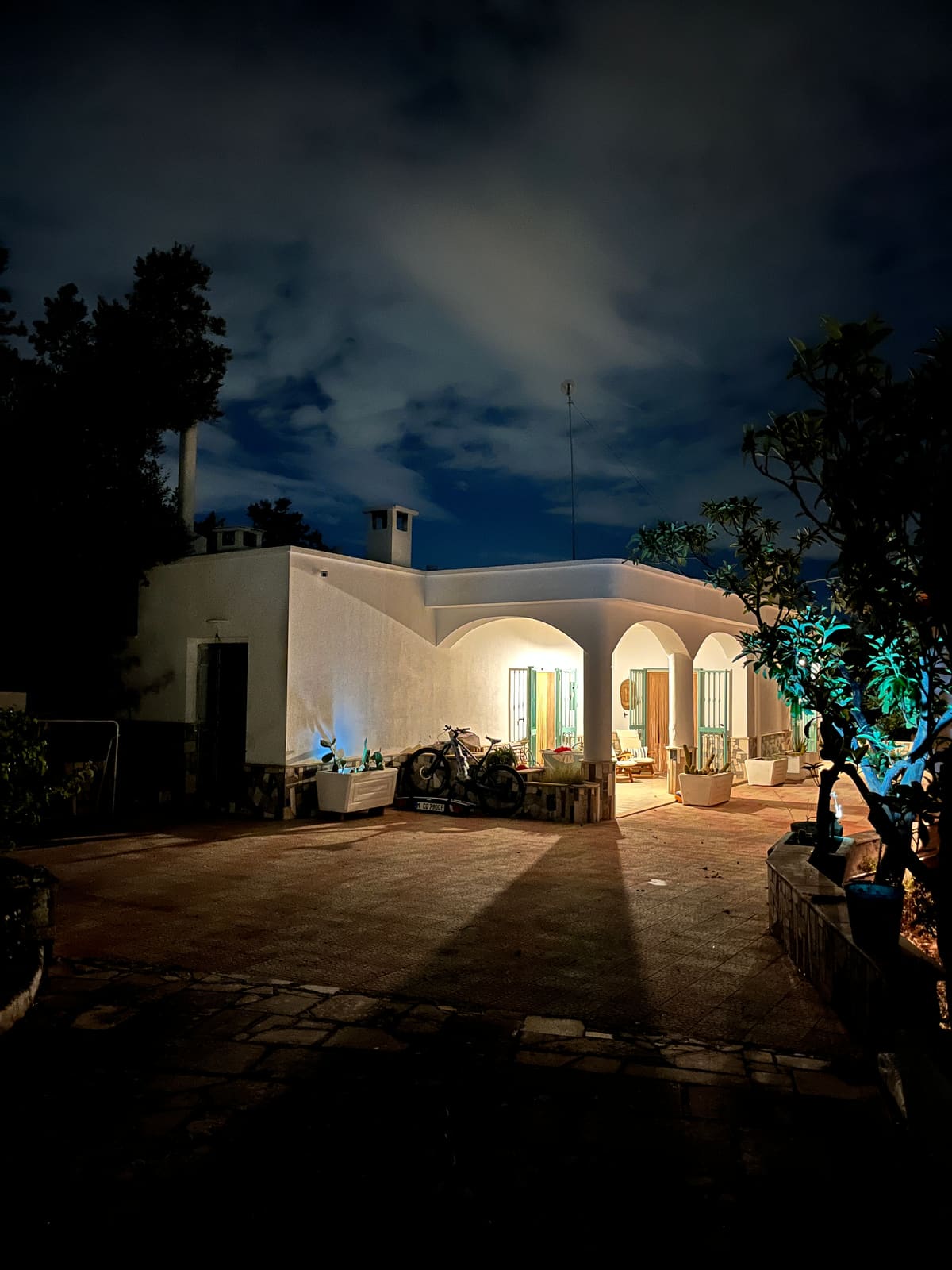
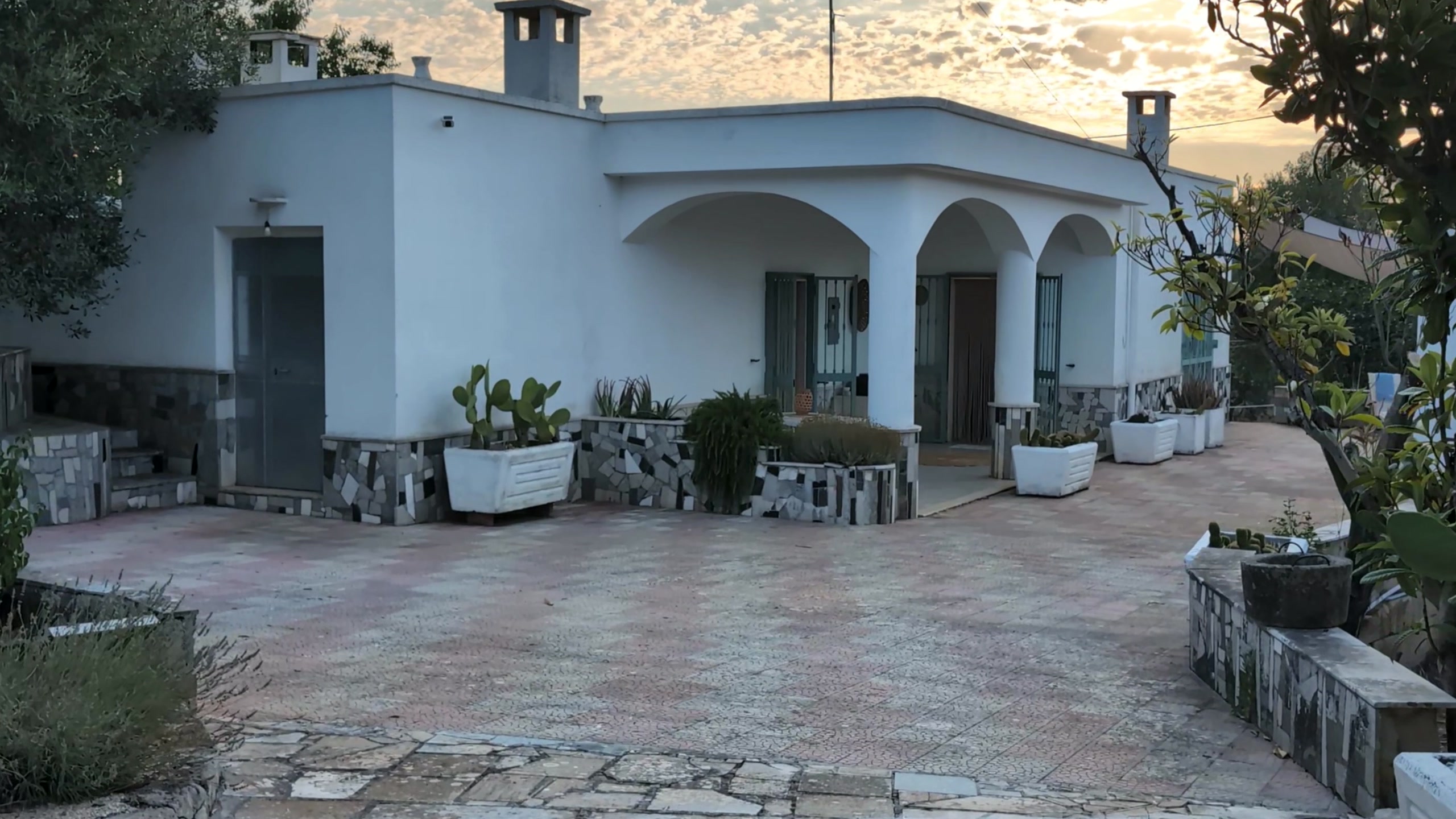
The house itself is small and white: two joined histories. One part is an old trullo, cone-roofed and thick-walled, cool even in August. The other is a lamia, flat-roofed and plastered white. They sit together the way the two pines do: different ages, one silhouette.
The Days
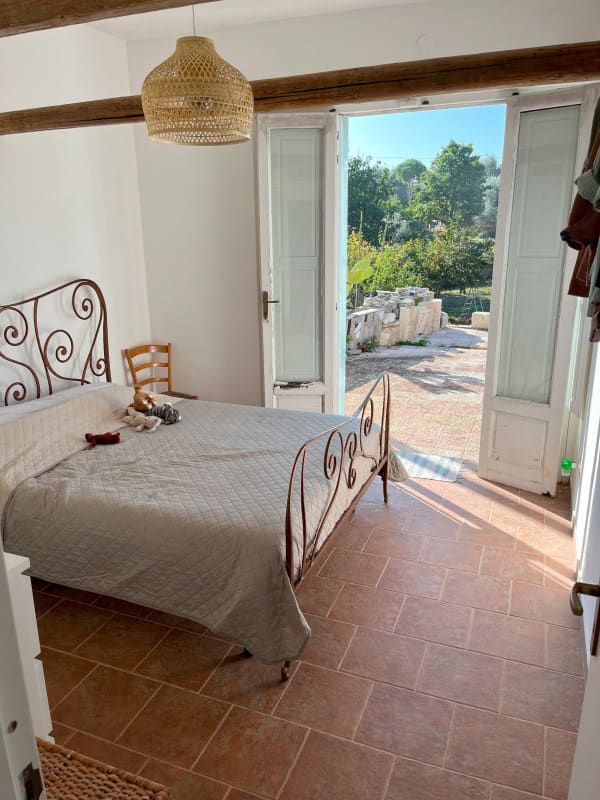
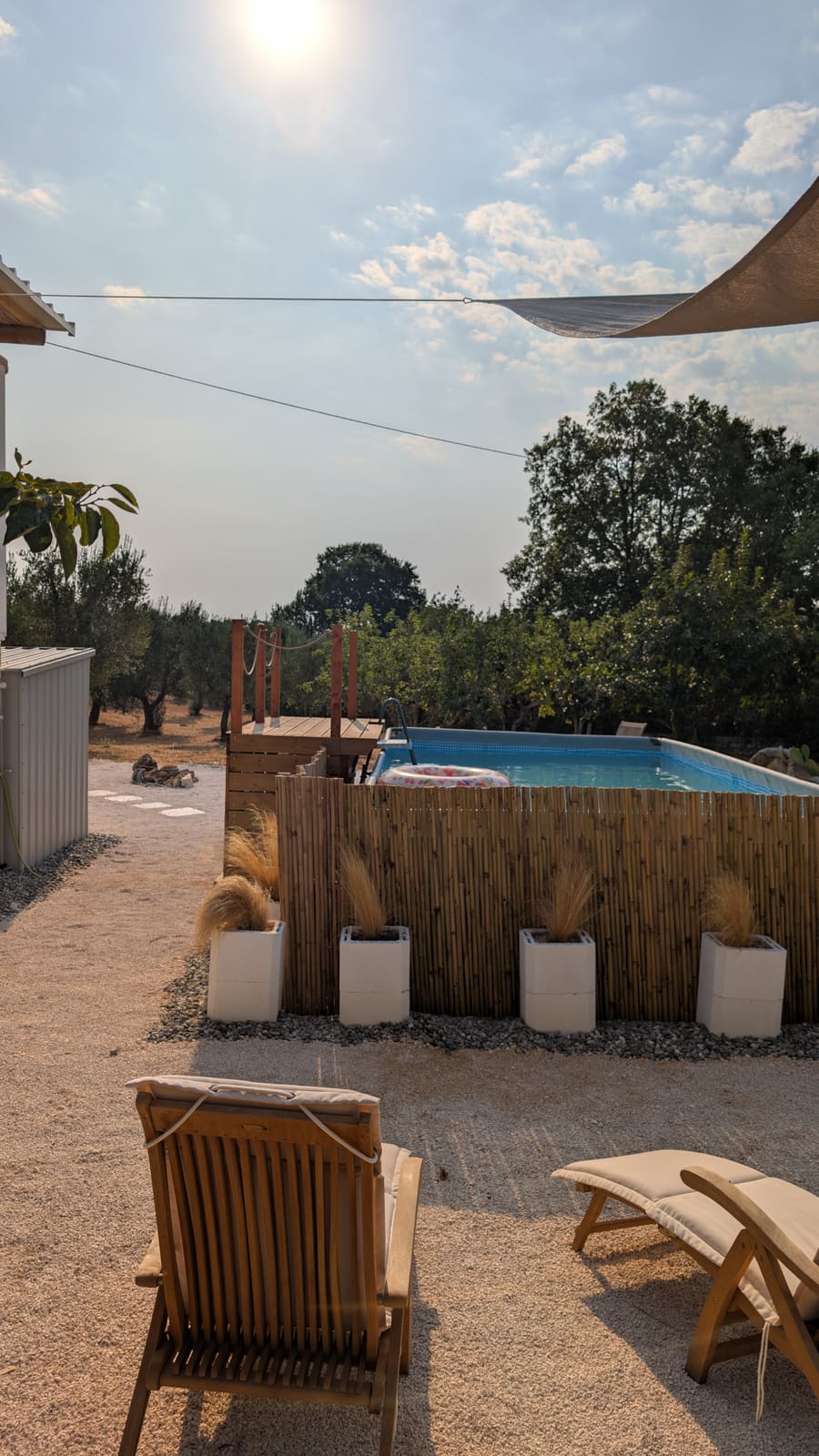
Morning light comes through the window grilles and lays long stripes across the bed. You wake up not because anything demands it, but because the light is too beautiful to sleep through. Coffee happens on the terrace. Somebody swims before breakfast. By noon the only sensible place is the shade, where the air smells of resin and dry grass.
Striped light on the bed, coffee on the terrace, a swim before breakfast.
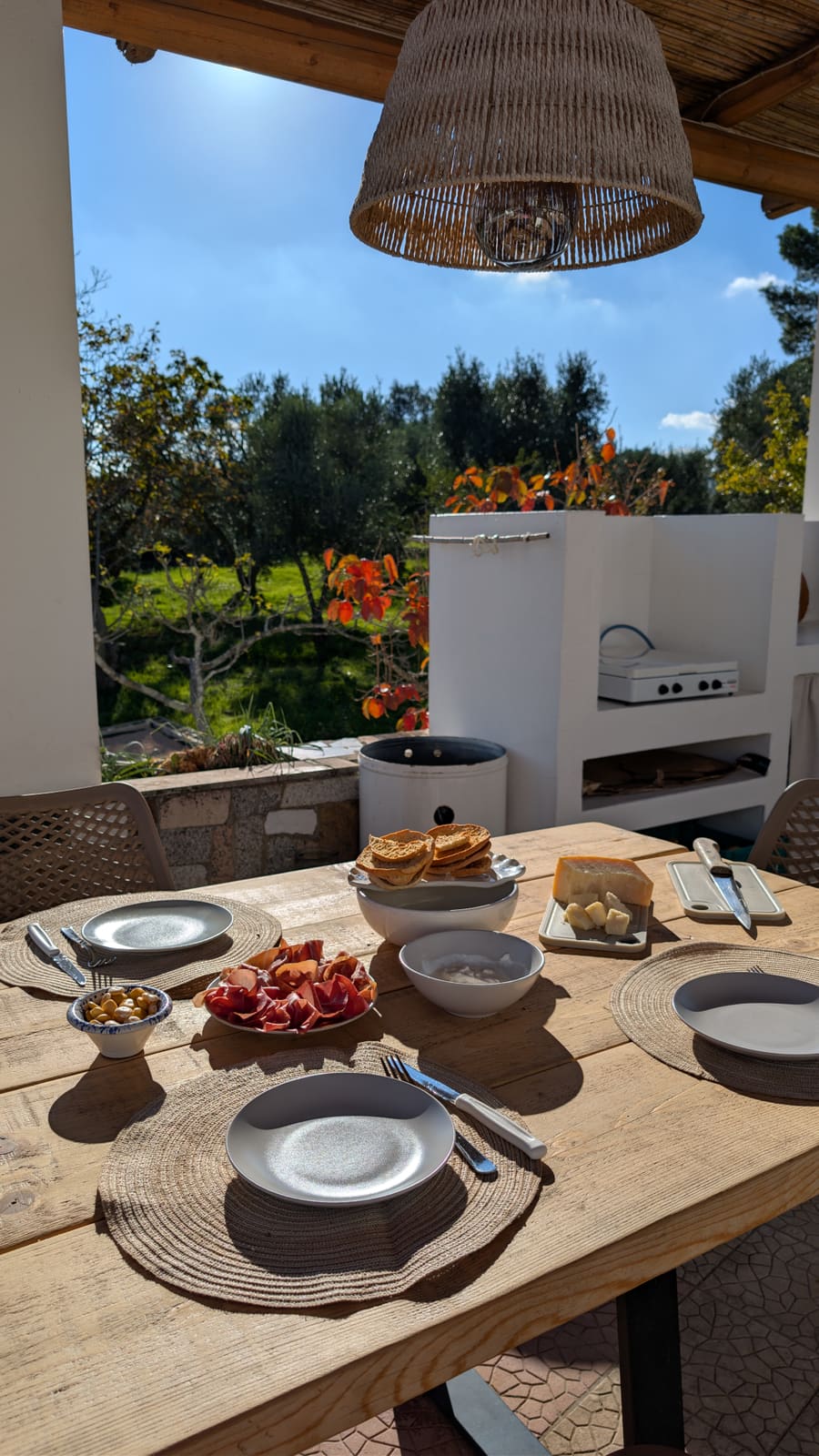
Lunch takes two hours. Someone grills, someone slices tomatoes; the kids are in the pool and you can hear them without seeing them.
By now the water is the only cool thing left. You get in, dry on warm stone in four minutes, and get in again.
“The sky goes a deep ink blue, the lamps come on warm and low, and dinner stretches until the stars are fully out. You notice you haven't looked at your phone since the afternoon.”
The House
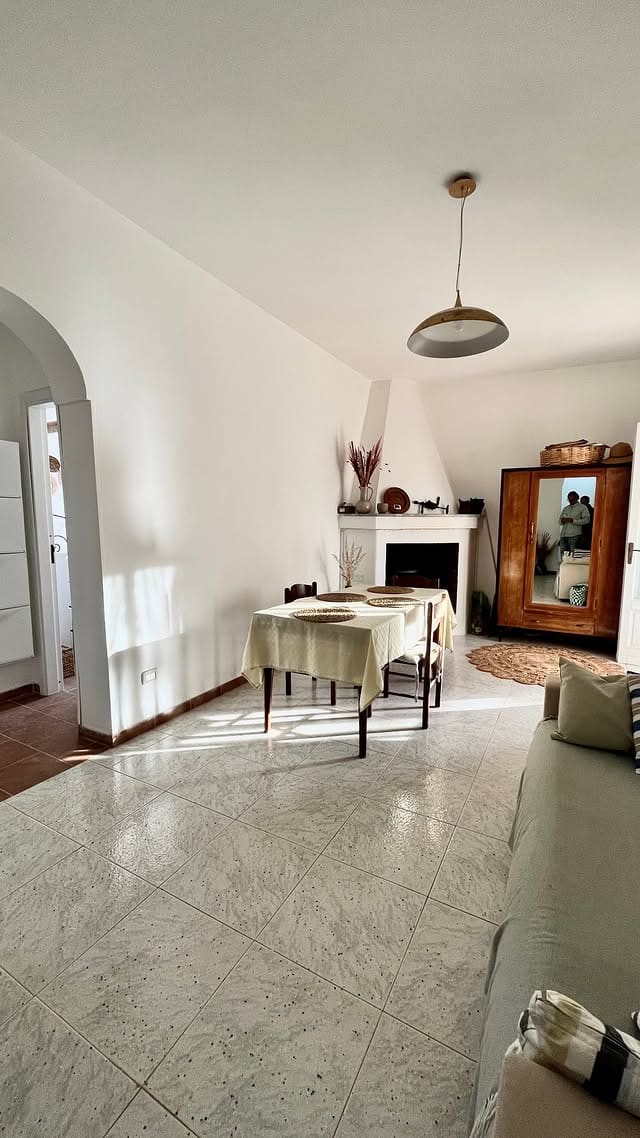
Everything honest and unfussy, renovated by hand over three years by the family who owns it, and it shows in the good way. You can feel that this is somebody's loved place, not an investment property.
It is not luxury in the polished sense. It is thick walls, cold water, warm light, enough space, no schedule. Outside: the terrace, the outdoor kitchen, the pool, and the land itself, which is the real amenity. You can walk your own olive grove before breakfast.
Beyond the Gate
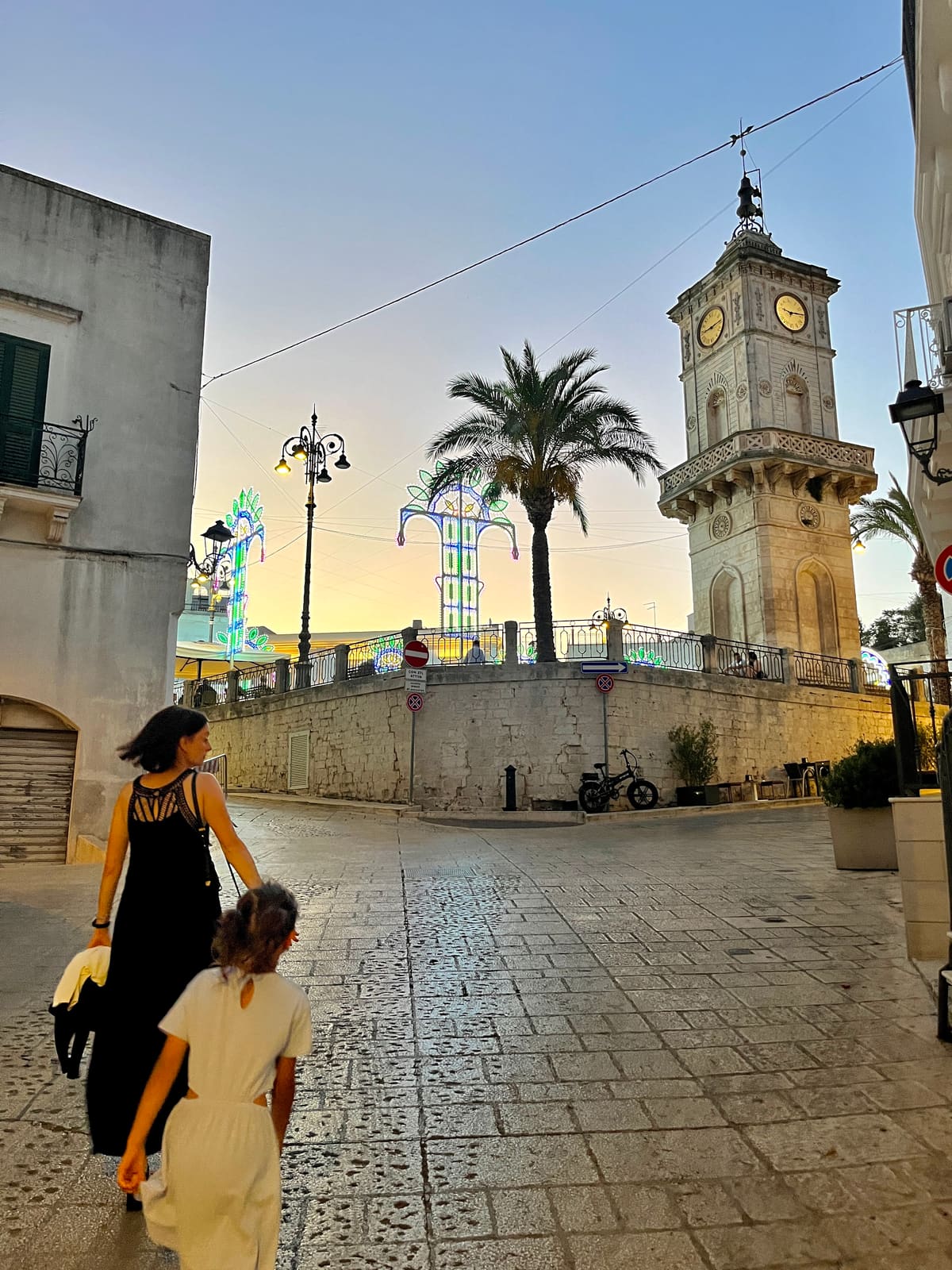
A whitewashed old town that takes its food very seriously: the evening passeggiata, the bakeries, the trattorie.
The beaches of the Adriatic and Ionian coasts are a short drive: sandy, easygoing, the kind of beach bar that spells out NO STRESS in rope above the boardwalk and means it.
But many days, nobody leaves the property at all.
Late October, Early November
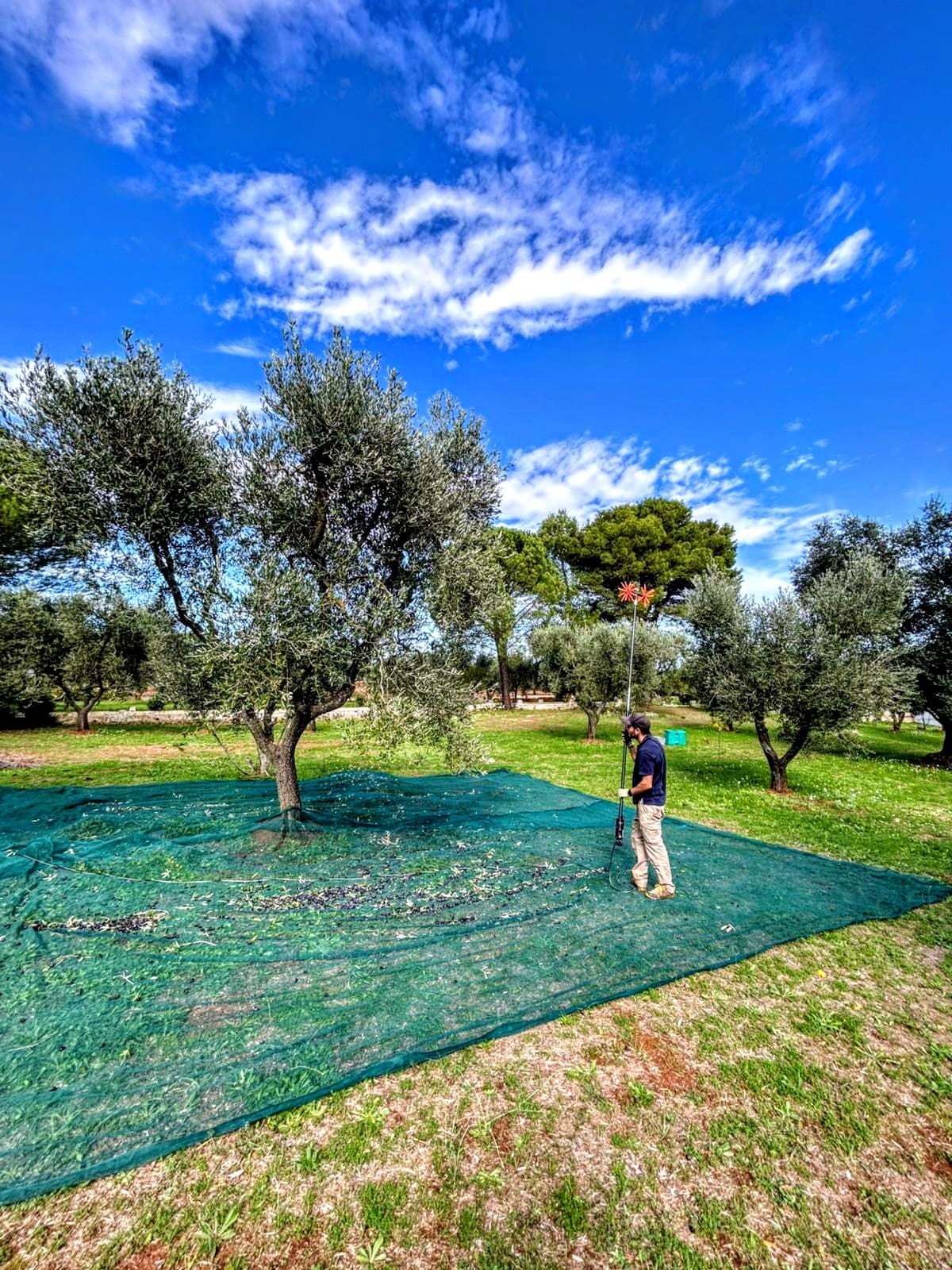
The nets come out first: green nets spread under the trees until the ground looks like a second canopy fallen to earth. Then the work: ladders leaned into branches, long rakes combing through the silver-green leaves, and the sound everyone remembers afterwards, the dry patter of olives raining into the nets, hundreds at a time.
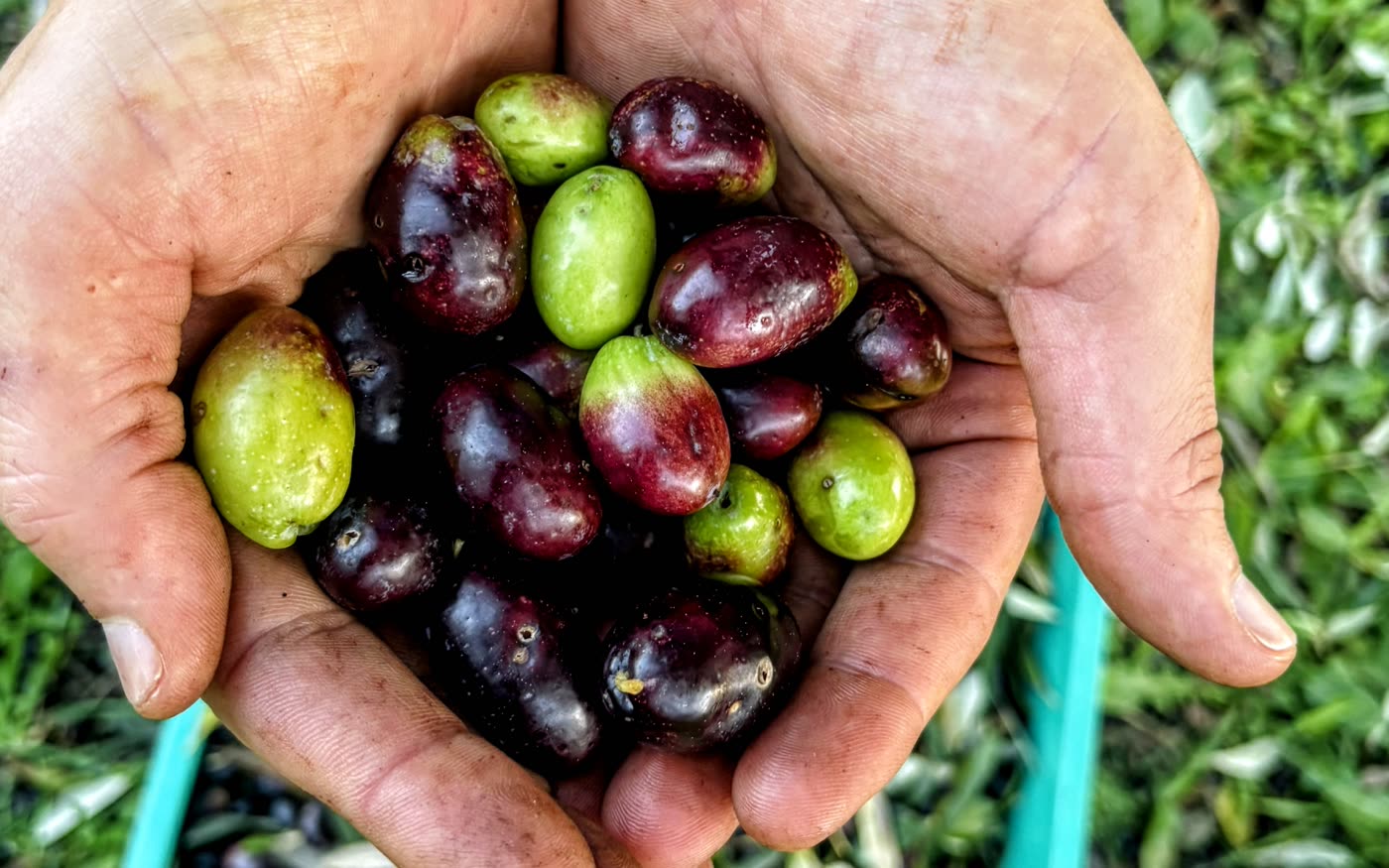
The olives are a surprise if you've only ever seen them in jars: glossy green, rose-pink, wine-red, deep purple-black, all on the same tree, sometimes all in the same handful. Your shoulders ache by mid-afternoon in a way that feels earned, and lunch in the middle of a harvest day tastes better than any restaurant meal of the summer.
A Few Hours Between Branch and Bottle
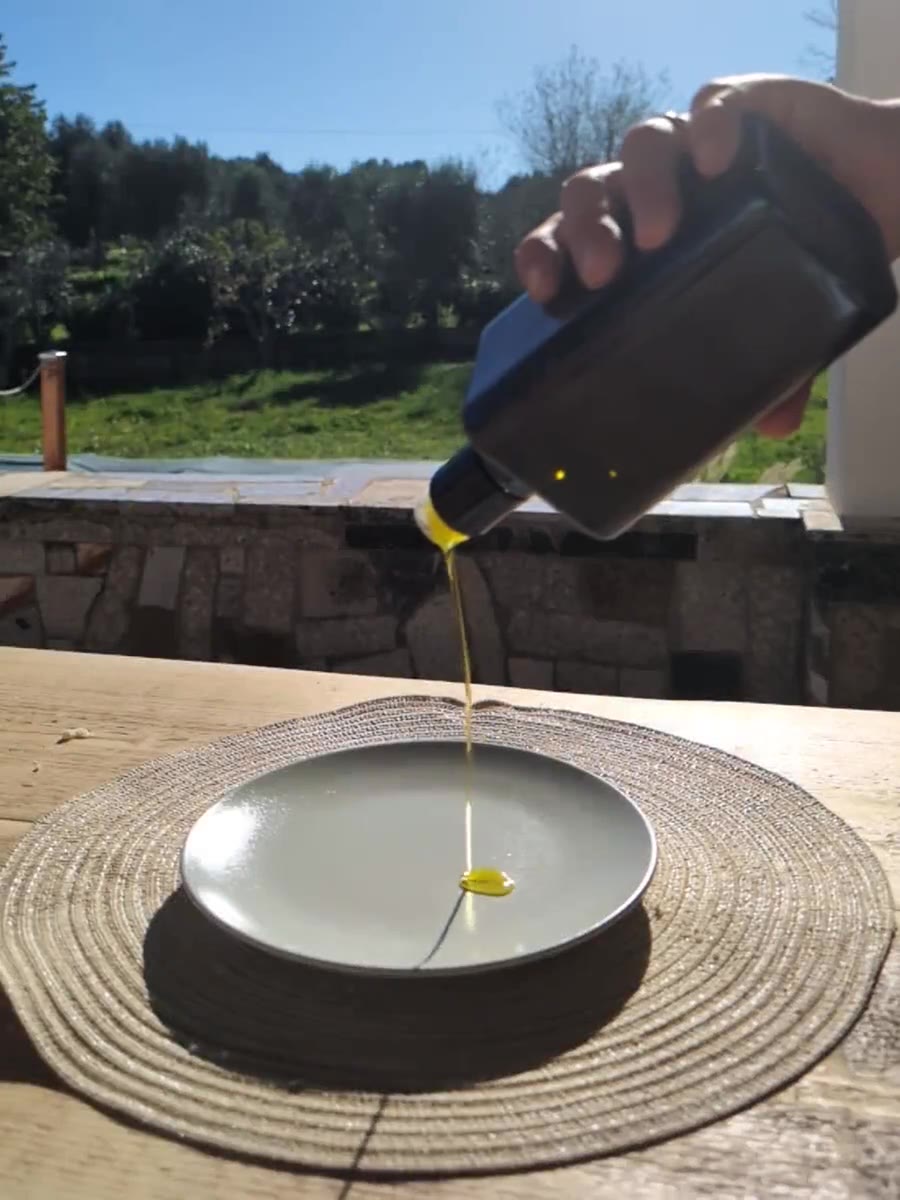
Poured over warm bread, over tomatoes still tasting of sun, it is not a condiment. It is the taste of the specific ground you were standing on that morning.
And months later, in a gray northern winter, someone opens the bottle and the kitchen fills faintly with that same green smell. For a moment it is October again: the nets are under the trees, and the two pines are standing over everything, keeping watch.
I · The Frantoio
The sacks go into the car and down to the local mill. It smells overwhelming in there: crushed leaves, green fruit, something peppery that catches your throat.
II · The First Taste
There is no ceremony to it, and that is exactly the beauty. The first taste happens right there, on bread, everyone standing.
III · The Cough
Green like cut grass and artichokes, then a bitterness, then the pepper that burns the back of your throat and makes half the family cough, and everyone laugh.